The lid decides whether a glass storage container actually keeps food fresh — more than the glass body does. Snap-on locking lids win on leak-proof transport, silicone-seal lids win on everyday fridge storage, and vented lids win on microwave reheating. The right choice depends on what your buyers store, how they reheat, and whether the container ships retail-boxed. Below is how we help importers match lid systems to their program before quotation.
What Are the Three Main Lid Types for Glass Food Storage Containers?
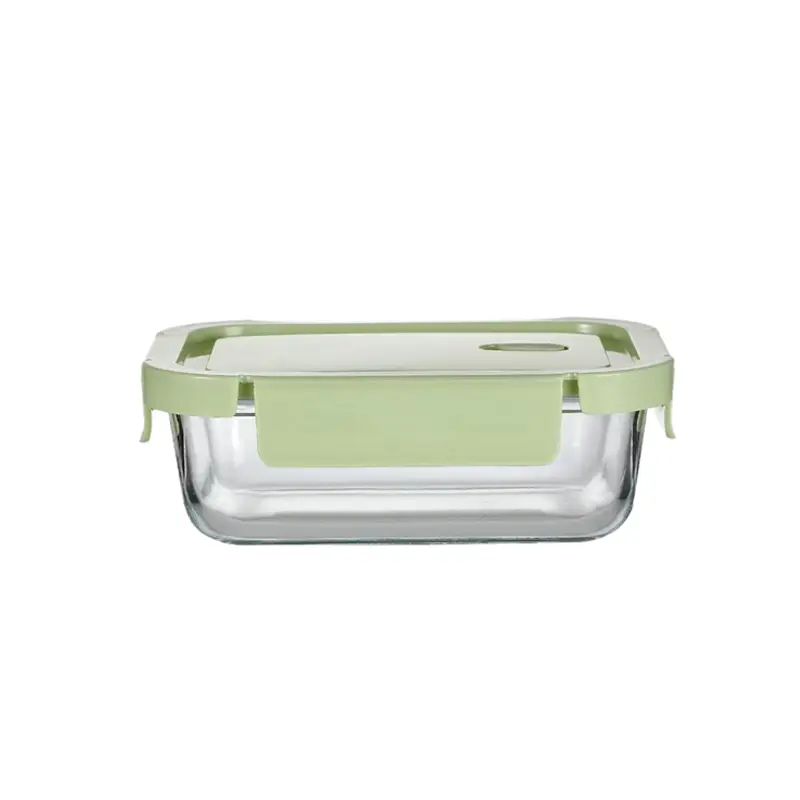
Most wholesale glass storage containers ship with one of three lid systems. A snap-on (locking) lid uses hinged clips — usually four — that clamp the lid onto the glass rim for a mechanical seal. A silicone-seal lid presses a silicone gasket against the rim; it closes with hand pressure and no clips. A vented lid adds a small steam valve or vent plug, most often on a snap-on or silicone-seal base, so pressure escapes during microwave reheating.
All three pair with the same borosilicate 3.3 glass bodies in our program — around 120°C thermal shock resistance and a -20°C to 400°C working range — so the material story stays consistent while the lid changes the use case.
Snap-On vs Silicone-Seal: Which Keeps Food Fresher?
For raw freshness in the fridge, both work; the difference is in transport and daily handling.
| Snap-on (locking) lid | Silicone-seal lid | Vented lid | |
|---|---|---|---|
| How it seals | 4-hinge clips clamp onto the rim | Silicone gasket pressed by hand | Vent plug + base seal (either type) |
| Best for | Lunch boxes, soups, liquids in transit | Fridge storage, meal prep, stacking | Microwave reheating without removing the lid |
| Buyer profile | Commuters, soup and salad programs | Households, weekly meal-prep sets | Office and family reheating use |
| Watch out for | Clips add a failure point; check hinge life per SKU | Gasket must match the rim exactly — a near-fit leaks | Vent must be opened before microwaving |
One practical rule from our merchandising desk: a lid that seals on one SKU is never assumed to seal on another. Every lid system is fit-tested against its matched glass body before an order ships — snap-lock, silicone-seal and vented alike — because rim tolerances differ slightly between molds.
Can the Lids Go in the Oven or Microwave?
The glass body can; the lid usually should not go in the oven. Our borosilicate food storage bodies are oven-to-freezer safe, but lids come off before oven use — standard practice across the industry. For the microwave, reheat without the lid, or use a vented lid with the vent open. Round containers heat most evenly in the microwave; rectangular ones are the most popular shape for fridge storage and leftovers because they use shelf and carton space efficiently.
Term check — “airtight seal”: An airtight seal means the lid-to-rim contact blocks air exchange between the container interior and the outside. In glass food storage it is achieved either mechanically (locking clips pressing the lid down) or by compression (a silicone gasket squeezed against the rim). True airtightness slows oxidation and moisture loss, which is what keeps prepped food fresh for days rather than hours.
How Do You Avoid Lid-Fit Problems in Bulk Orders?
Lid fit is the number one claim driver in glass storage programs — more than breakage. A loose lid or a weak color box creates complaints before the product reaches the retail shelf. Three things we check before any food container order leaves:
- Per-SKU fit test. Each lid system is tested on its own glass body, not on a “representative” size. Rim dimensions vary between molds.
- Gasket seating. On silicone-seal lids, the gasket must sit evenly in its channel with no twist — a twisted gasket looks sealed and leaks.
- Retail box strength. Lids add height and clip protrusions; the color box must clear them without crushing the seal in transit.
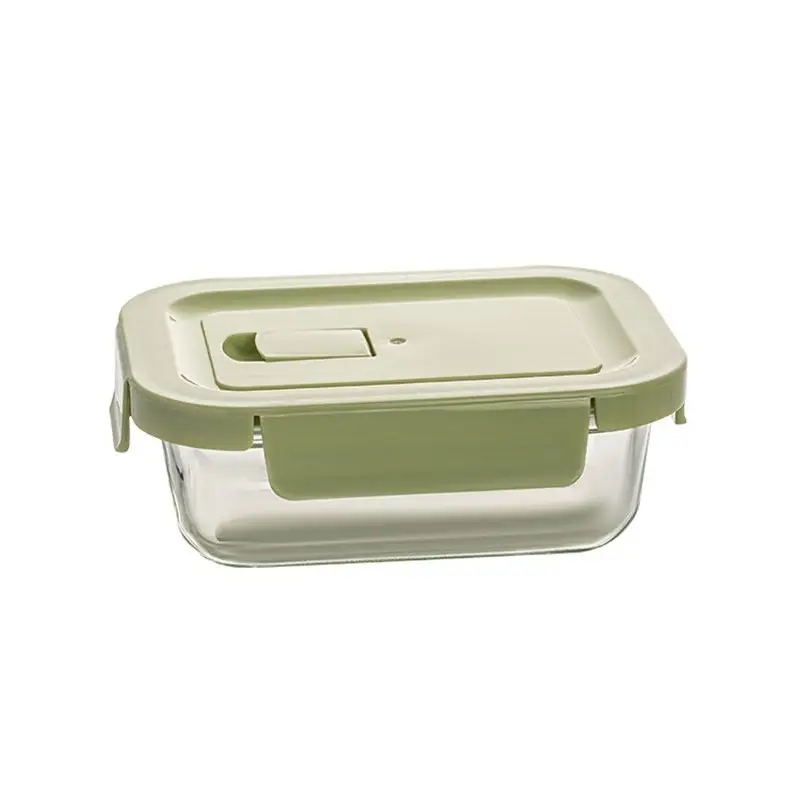
Lid systems matched to glass bodies before quotation — snap-on, silicone-seal and vented.
Which Lid Should You Choose for a Mixed Container Program?
Match the lid to the channel, not to personal preference. Supermarket meal-prep sets move best with silicone-seal lids (easy open/close, neat stacking). Lunch-box and soup programs need snap-on locking lids (leak-proof in a bag). If your assortment serves office workers who reheat at their desks, add vented options. A mixed container can carry two lid systems across SKUs — for example, silicone-seal on the storage sizes and snap-on on the lunch-box sizes — as long as each SKU’s lid is confirmed before production. See how mixed programs are planned in our mixed SKU glassware guide, and compare body materials in borosilicate vs soda-lime vs plastic.
Why XSD Glass
Our wholesale glass food storage programs pair borosilicate 3.3 glass bodies — around 120°C thermal shock resistance, -20°C to 400°C working range — with snap-on, silicone-seal and vented lid systems that are fit-tested per SKU before quotation.
Programs run on a container-load basis: 1 × 20GP minimum, with 2–8 SKUs combinable in one mixed container. Lead time is 30–45 days from confirmed artwork and deposit.
- ✓ 800,000+ pcs/day production capacity for volume programs
- ✓ 10+ years of export experience serving 30+ countries
- ✓ ISO & BSCI audited factory
- ✓ Per-SKU lid-fit testing before any order ships
Frequently Asked Questions
Do silicone-seal lids wear out faster than snap-on lids?
The gasket is the wear part on both systems — silicone gaskets can be replaced on most designs, while a broken hinge clip usually means a new lid. For retail programs, we recommend confirming the replacement-lid policy per SKU before ordering.
Can I get the same container with two different lid types?
Yes. The same glass body can pair with a snap-on lid for one market and a silicone-seal lid for another, as long as each combination is fit-tested. This is common in mixed container programs serving multiple channels.
Are glass storage container lids dishwasher safe?
Generally yes for the lid bodies; remove and wash silicone gaskets separately to keep the seal even. Check the per-SKU spec — clip mechanisms vary.
What is the minimum order for glass food storage containers?
Our programs run on a container-load basis: 1 × 20GP minimum, with 2–8 SKUs combinable in one mixed container. Lead time is 30–45 days from confirmed artwork and deposit.
How do I know if a container is really borosilicate?
Check the product spec for “borosilicate 3.3” and the thermal shock rating — ours is around 120°C differential with a -20°C to 400°C working range. Our guide on how to tell borosilicate from soda-lime glass walks through the checks.
About the author: Suzy — 15 years in glassware export merchandising at XSD Glass, matching lid systems and packaging to buyer programs across 30+ countries.
Request a Quote
Send your SKU list and lid preference — our merchandising team will match lid systems, packaging and carton planning to your program before quotation. You can also reach us directly on WhatsApp at +86 187 5524 6826.