Mixed SKU Programs · Container-Load Supply
Mixed SKU Glassware Programs for Importers Who Need More Than One Product
One container, multiple SKUs — retail-ready glassware assortments without the full-container-per-item burden. XSD Glass combines food storage containers, bakeware, bowls, drinkware sets and tableware from our partner factory network into single mixed container shipments, packed for retail shelves and delivered on container-load economics.
Watch: who XSD Glass is and how our mixed-SKU programs work:

Why XSD Glass
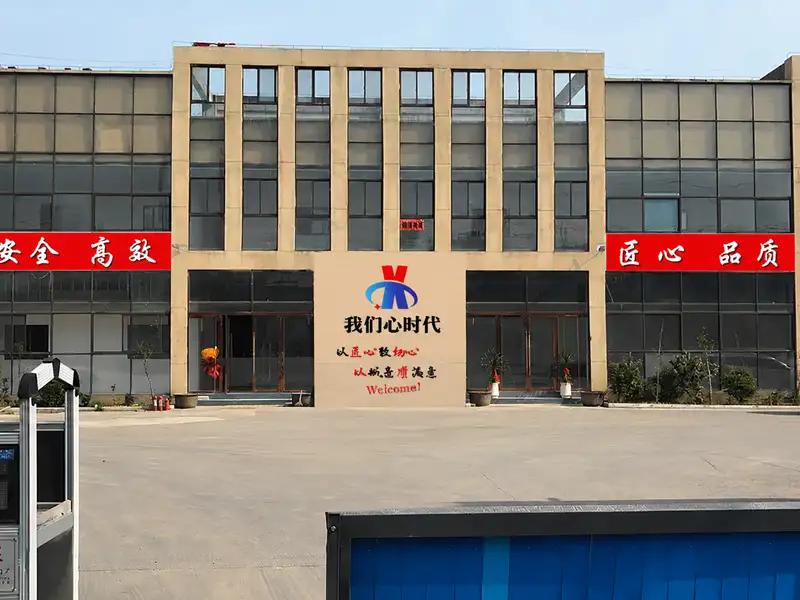
XSD Glass operates from Fengyang Industrial Zone, Bengbu City, Anhui — China's glassware manufacturing hub — on automated press lines producing 800,000+ pieces a day. With 10+ years of FCL export experience serving buyers in 30+ countries, our ISO 9001 and BSCI-audited facility runs 4,000+ ready-stock models backed by thousands of self-owned molds.
We have supplied major trading houses including Garbo — the kind of volume buyer that audits factories before placing orders. When you work with XSD Glass, you buy factory-direct from Bengbu with no middlemen: FOB pricing, stable 30–45 day lead times, and a Key Account Manager (Suzy, 15 years in glassware export) who answers on WhatsApp.
- ✓ 800,000+ pcs/day on automated press lines — capacity for chain-store programs
- ✓ 4,000+ ready-stock models — mix 10+ standard items in one 40HQ
- ✓ Samples in 3–5 days via DHL/FedEx — mass production in 30–45 days
- ✓ ISO 9001 & BSCI audited — the same compliance bar major trading houses require
Why Importers Choose Mixed SKU Over Single-Item Containers
Single-SKU containers force a painful choice: tie up cash in deep stock of one item, or skip the category entirely. Mixed SKU programs exist to break that tradeoff — here is what changes for your buying plan.
✓ Spread one container across 2–8 SKUs instead of betting on one
Distributors and retail chains rarely need a full container of a single glass bowl. A mixed program lets you allocate container space across food storage, bakeware, bowls and drinkware in proportions that match your actual sales mix — less dead stock, faster sell-through per SKU. Each SKU's quantity is confirmed before production so the loading plan is locked, not improvised at the dock.
✓ Retail-ready packaging, SKU by SKU
Every SKU ships in its own retail packaging — color box, gift box or window box with barcode — so cartons arrive ready for shelf or e-commerce fulfillment. Mixed loading does not mean mixed packing: each SKU is packed, labeled and carton-marked separately, then consolidated at container level. See our packaging options for the full range.
✓ One order, one shipment, one set of documents
Instead of managing four suppliers, four production schedules and four freight bookings, you place one mixed SKU order with one production timeline (30–45 days) and one bill of lading. For small and mid-size importers without a China buying office, that consolidation is the difference between a workable program and a logistics project you cannot staff.
✓ Borosilicate 3.3 across the food-contact range
All food storage, lunch box, meal prep and bakeware SKUs in the program use 3.3 borosilicate glass — around 120°C thermal shock resistance, -20°C to 400°C working range — so your assortment carries one consistent material story instead of a mix of soda-lime and borosilicate that confuses buyers. Read the material comparison.

How a Mixed SKU Glassware Order Works
A mixed container order follows five defined steps. Nothing is left to dock-side improvisation.
SKU selection and quantity split
You choose 2–8 SKUs from our food storage, bakeware, bowls with lids, drinkware sets and glassware sets ranges. We confirm per-SKU minimum quantities and check that the split fills a 20GP efficiently — no half-empty container economics.
Packaging confirmation per SKU
Each SKU gets its own retail packaging spec — box type, dimensions, barcode placement, language versions. Packaging artwork is confirmed before production starts, because reprinting 8 SKUs of boxes mid-production is where mixed programs go wrong.
Synchronized production (30–45 days)
All SKUs are scheduled to complete in the same window. Glass bodies, lids and packaging from different lines converge on one timeline so no SKU holds the container waiting. Standard lead time is 30–45 days from confirmed artwork and deposit.
Separated packing, consolidated loading
Each SKU is packed into its own export cartons with SKU-level marks. Cartons are then loaded to a container loading plan that balances weight distribution and breakage protection — heavier bakeware low, lighter drinkware high, dividers between dissimilar shapes.
One shipment, one document set
Single bill of lading, single packing list (with SKU-level breakdown), single commercial invoice. Your forwarder clears one container, not four LCL puzzles.
Expert note: The most common failure in mixed SKU programs is artwork arriving late for one SKU while seven others are ready to produce. Send all packaging artwork together, before the production clock starts — a mixed container is only as fast as its slowest SKU. — Suzy, XSD Glass merchandising
What You Can Mix in One Container
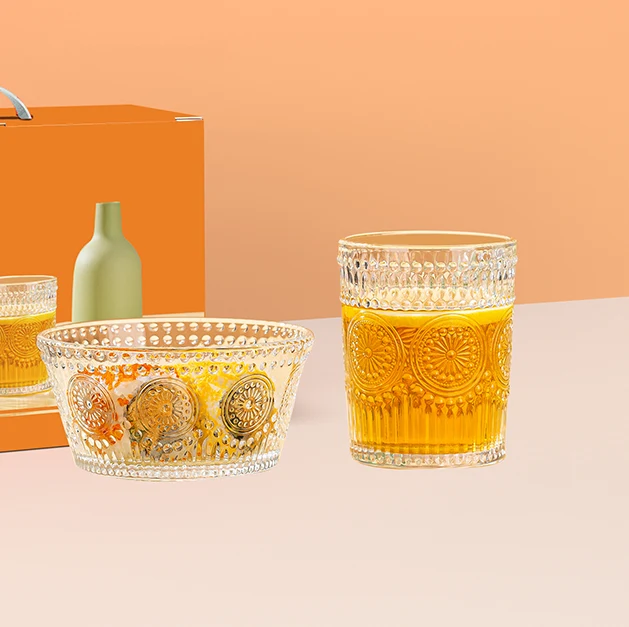
Any combination from our wholesale ranges. The three most-requested mixed programs are detailed on their own pages.
| Program | Typical SKUs | Best for |
|---|---|---|
| Mixed food storage program | Round/square/rectangular containers, lunch boxes, meal prep sets | Supermarket & homeware retail assortments |
| Mixed bakeware program | Baking dishes, pie plates, casserole + prep bowls | Kitchenware chains, seasonal bakeware promos |
| Full mixed container order | Cross-category: storage + bowls + cup sets + tableware | Distributors building a full glassware line |
Beyond these programs, any SKU from our catalog can join a mix: containers with lids, bowl sets, tableware, pot lids, storage jars and canister sets. If you already run a mixed container program with us, the same loading discipline applies.
Mixed SKU vs. Single-SKU Container: Honest Comparison
Mixed SKU is not better for everyone. Here is where each model wins.
| Mixed SKU container | Single-SKU container | |
|---|---|---|
| SKU count | 2–8 per container | 1 per container |
| Inventory risk | Spread across SKUs; slower-moving items balanced by fast ones | Concentrated; one misjudged item = full container of slow stock |
| Per-unit cost | Slightly higher (more changeovers, more packaging versions) | Lowest (one setup, one packaging run) |
| Lead time | 30–45 days; gated by slowest SKU | 30–45 days; single timeline |
| Best for | Distributors, retail chains, e-commerce sellers testing assortments | High-volume buyers with proven single-item velocity |

Packaging Built for Mixed Loading
Mixed containers live or die on packaging discipline. Each SKU is packed as if it were shipping alone.
- ✓SKU-level retail boxes. Color box, gift box or window box per SKU with barcode and multilingual copy as specified. One SKU's packaging never shares a carton with another's.
- ✓Export carton separation. Retail boxes are grouped into export cartons by SKU, with SKU code, quantity and gross/net weight printed on every carton face.
- ✓Loading plan by weight and fragility. Heavy bakeware loads low and forward; lighter drinkware and cup sets load high; corrugated dividers separate dissimilar shapes. The plan is shared with you before loading day.
- ✓Pallet or floor-loaded. Floor loading maximizes CBM for most buyers; pallets available on request where your warehouse requires them.
Full packaging range: glassware packaging options.
Watch: how we pack color boxes and inserts for wholesale glassware:
Quality Control Across Multiple SKUs
More SKUs means more inspection points. Our QC boundary is explicit.
- ✓100% visual inspection on glass bodies for cracks, chips and bubbles before lidding — every SKU, every production run.
- ✓Lid-fit check per SKU. Snap-lock, silicone-seal and vented lids are fit-tested against their matched glass body; a lid that seals on one SKU is never assumed to seal on another.
- ✓Batch sampling on packaging. Print quality, barcode scannability and box dimensions are checked per packaging batch.
- ✓Pre-loading carton audit. Carton marks, quantities and SKU separation are verified against the packing list before the container door closes.
Commercial Terms
| Minimum order | 1 × 20GP container (mixed SKUs combined) |
| Lead time | 30–45 days from confirmed artwork and deposit |
| SKUs per container | 2–8 (quantity split confirmed before production) |
| Compliance | Food-contact glass: FDA & RoHS compliant materials; test reports available on request |
| Trade terms | FOB / CIF / DAP quotable per destination |
Pricing is quoted per program based on SKU mix, packaging spec and destination — request a quote with your SKU list.
Is a Mixed SKU Program Right for You?
Good fit
- · Regional distributors building a multi-category glassware line
- · Retail chains and homeware importers needing shelf-ready assortments
- · E-commerce sellers testing which SKUs move before committing deep
- · Buyers who want one supplier, one shipment, one document set
Not a fit
- · Single-item high-volume buyers (a dedicated single-SKU container costs less per unit)
- · Orders below one 20GP container (see contact us for alternatives)
- · Buyers needing more than 8 SKUs per container (split into two programs)
How to Choose the Right SKU Mix for Your Market
A mixed container is only as good as its SKU mix. The wrong assortment ties up the same cash as a single-SKU container but sells slower. The right mix matches your channel, your price ladder, and your customers' buying habits.
Start with your best-selling category, then build outward. If your customers buy food storage containers every week, anchor the container with two or three storage SKUs in different sizes — round, square, and rectangular — then add one bakeware SKU and one drinkware SKU to fill the remaining space. This anchor-plus-satellite approach keeps the container grounded in proven demand while testing new categories with limited risk. A distributor who has sold storage containers for three years does not need to gamble the whole container on untested bakeware; one bakeware SKU at modest quantity is enough to test the waters.
Balance price points inside the container. A mix of all low-ticket items (small bowls, tumblers) leaves margin on the table; a mix of all high-ticket items (large casserole dishes, multi-piece sets) risks slow sell-through if your market is price-sensitive. A practical split is 60% mid-range volume drivers, 25% entry-level traffic builders, and 15% premium items that lift average order value. For example, a supermarket buyer might allocate 60% of carton space to 400ml–1000ml food storage containers (the everyday sellers), 25% to small prep bowls and tumblers (the impulse buys), and 15% to larger bakeware and serving pieces (the weekend cooking purchases).
Consider seasonality before locking the mix. Bakeware peaks in autumn and winter holiday cooking seasons in most markets. Drinkware and pitcher sets move faster in spring and summer. Food storage containers sell steadily year-round. If you are shipping a container in September, weight it toward bakeware for the holiday season. If you are shipping in March, lean toward drinkware and storage. We help buyers map SKU mix to their local selling calendar during the quotation stage — send your target arrival date and we will flag which categories typically peak in that window.
Finally, keep the mix to SKUs you can actually sell. Eight SKUs sounds ambitious, but if two of them are slow movers in your market, they drag the whole container's turnover. A focused mix of four to five SKUs that all sell beats an eight-SKU assortment where three sit in the warehouse. Start with four, learn what moves, then expand the mix on the next container.
Mixed SKU Container Loading: Carton, CBM and Weight Planning
Mixed containers fail at the loading dock when carton counts, CBM, and weight are not planned SKU by SKU. Here is how the math works in practice.
Every SKU in a mixed container has its own carton specification: pieces per carton, carton dimensions, carton CBM, and gross weight per carton. A food storage container SKU might pack 24 pieces per carton at 0.06 CBM per carton. A bakeware SKU might pack 12 pieces per carton at 0.08 CBM per carton. A drinkware set might pack 48 pieces per carton at 0.05 CBM per carton. The loading plan sums carton counts across SKUs to fill the container without exceeding its CBM or weight limit. A 20GP container holds roughly 33 CBM of cargo; a 40HQ holds roughly 68 CBM. The goal is to use 90% or more of that space — a half-empty container wastes freight money on air.
Weight matters as much as volume. Glass is heavy. A container of bakeware (thick-walled casserole dishes) hits its weight limit before its CBM limit. A container of lightweight tumblers and small bowls hits its CBM limit before its weight limit. Mixed programs balance these extremes: pairing one heavy SKU (bakeware) with one light SKU (drinkware) lets the container fill both volume and weight efficiently. Our loading plan calculates both CBM utilization and weight utilization per SKU and adjusts the quantity split so neither limit is wasted.
| Planning factor | What we calculate | Why it matters |
|---|---|---|
| Carton count per SKU | Pieces per carton × carton quantity = total pieces per SKU | Determines whether each SKU fills complete cartons (no half cartons) |
| CBM per SKU | Carton CBM × carton count = total CBM per SKU | Sums to container CBM utilization; target 90%+ |
| Gross weight per SKU | Carton gross weight × carton count = total weight per SKU | Keeps container under max payload; balances heavy and light SKUs |
| Loading order | Heavy SKUs low, fragile SKUs high, dividers between shapes | Prevents crushing and breakage during transit |
You receive the full loading plan — carton counts, CBM, weight, and placement diagram — before loading day. If the plan shows 85% CBM utilization, we will suggest adjusting one SKU's quantity upward to fill the gap. If it shows weight over limit, we will suggest reducing the heaviest SKU and adding a lighter one. The plan is a working document, not a formality.
Borosilicate 3.3 vs Soda-Lime: What Goes in Your Mixed Container
Not every SKU in a mixed container uses the same glass. Understanding the material split prevents buyer confusion and returns.
Food-contact SKUs in our mixed programs — food storage containers, lunch boxes, meal prep containers, and bakeware — use 3.3 borosilicate glass. Borosilicate 3.3 has a low thermal expansion coefficient, which gives it around 120°C thermal shock resistance: it can go from freezer to oven without cracking under normal use. Its working range is -20°C to 400°C. This matters for bakeware that goes into a hot oven and for food storage that goes from refrigerator to microwave. A buyer who puts a borosilicate container in the oven expects it to survive; a soda-lime container in the same oven would crack.
Drinkware, tableware, and decorative SKUs typically use soda-lime glass. Soda-lime is the standard for drinking glasses, tumblers, pitchers, and serving pieces that do not face extreme temperature changes. It is lighter, more transparent, and more cost-effective for high-volume drinkware. A mixed container that pairs borosilicate food storage with soda-lime drinkware gives the buyer both material stories: heat-resistant storage for the kitchen, and clear, affordable drinkware for the table.
The material split affects packaging and labeling. Borosilicate SKUs carry oven-safe and freezer-safe claims on their retail boxes. Soda-lime SKUs do not. Mixing up the labels — putting an oven-safe claim on a soda-lime tumbler — creates returns and complaints. Our packaging QC checks material claims against the actual glass type for every SKU before cartons are sealed. If you are unsure which material a SKU uses, ask before approving artwork; we will confirm the glass type for each SKU in your mix.
| Property | Borosilicate 3.3 | Soda-lime |
|---|---|---|
| Thermal shock resistance | Around 120°C differential | Low — not for oven use |
| Working temperature range | -20°C to 400°C | Room temperature to warm liquids |
| Typical SKUs in mixed program | Food storage, lunch boxes, meal prep, bakeware | Drinkware, tumblers, pitchers, tableware |
| Retail box claims | Oven-safe, freezer-safe, microwave-safe | Everyday use, dishwasher-safe (per SKU spec) |
One practical tip: do not mix borosilicate and soda-lime SKUs in the same retail box or bundle. A "bakeware + drinkware" gift set that pairs a borosilicate baking dish with soda-lime tumblers confuses buyers about which pieces are oven-safe. Keep material families separate at retail-pack level, even when they share a container.
From Sample Approval to Container Shipment: Full Timeline
A mixed SKU program runs on a 30–45 day production clock. Here is what happens in each phase, and where delays usually occur.
Phase 1 — Samples (3–5 days). If you need physical samples before committing, we ship them via DHL or FedEx within 3–5 days for standard models from our 4,000+ ready-stock range. Samples let you check glass clarity, lid fit, and packaging quality before ordering. For custom artwork or private-label packaging, samples take longer because the box must be printed first. Order samples early — waiting until the production clock starts to request samples compresses the timeline and risks delays.
Phase 2 — Artwork and SKU confirmation (1–2 weeks, buyer-controlled). You confirm the SKU list, per-SKU quantities, packaging artwork, barcode placement, and language versions for every SKU in the mix. This phase is buyer-controlled: the faster you confirm artwork, the faster production starts. The most common delay in mixed programs is one SKU's artwork arriving a week late while seven others are approved. We recommend submitting all artwork files together, in one batch, before production begins. Do not approve seven SKUs and leave the eighth "for later" — the container cannot ship until all eight are produced.
Phase 3 — Production (30–45 days). Once artwork is confirmed and deposit is received, production runs for 30–45 days. Glass bodies, lids, and packaging are produced on parallel lines and synchronized to complete in the same window. Our automated press lines produce 800,000+ pieces per day across the factory, so capacity is not the bottleneck — synchronization is. A mixed program with eight SKUs requires eight production schedules to converge. We monitor each SKU's progress weekly and flag any SKU falling behind so the quantity split can be adjusted before it gates the container.
Phase 4 — QC, packing, and loading (3–5 days). After production, each SKU goes through 100% visual inspection, lid-fit testing, and packaging batch checks. Cartons are packed by SKU, marked, and audited against the packing list. The container is loaded to the pre-shared loading plan, with heavy items low and fragile items high. You receive photos of the loaded container and the final packing list before the container door closes.
Phase 5 — Shipment and documents (1–2 days). Bill of lading, commercial invoice, and packing list (with SKU-level breakdown) are issued. Your forwarder clears the container. Total elapsed time from artwork confirmation to vessel departure is typically 35–50 days, including QC and loading. Plan your inventory accordingly — do not promise retail delivery dates that assume the container arrives the day production ends.
Five Costly Mixed SKU Mistakes Importers Make
These mistakes cost real money. All five are preventable with planning.
1. Approving artwork SKU by SKU instead of all at once
The single most expensive mistake. A buyer approves seven SKUs, waits two weeks to approve the eighth, and the container ships two weeks late. The seven approved SKUs sit in the warehouse while the eighth is produced. The fix: submit all artwork files together before production starts. If one SKU's artwork is not ready, hold the whole program until it is — do not start production on seven and hope the eighth catches up.
2. Underestimating per-SKU minimum quantities
Each SKU must fill complete export cartons. A buyer who orders 100 pieces of a SKU that packs 48 per carton gets two full cartons (96 pieces) plus four loose pieces that cannot ship. The fix: confirm per-SKU carton quantities before ordering. Round each SKU's quantity to a multiple of its pieces-per-carton count.
3. Mixing borosilicate and soda-lime claims on retail boxes
A buyer labels a soda-lime tumbler as "oven-safe" because the borosilicate bakeware in the same container carries that claim. The tumbler cracks in the oven, the buyer returns it, and the seller faces a complaint. The fix: verify material type for every SKU before approving retail box copy. Borosilicate claims go only on borosilicate SKUs.
4. Ignoring weight distribution in the loading plan
A buyer loads heavy bakeware on top of lightweight drinkware to "use space efficiently." The drinkware crushes in transit. The fix: follow the loading plan — heavy low, fragile high, dividers between dissimilar shapes. Do not override the plan at the dock.
5. Ordering more SKUs than the market can absorb
A buyer orders eight SKUs to "maximize assortment" but only three sell well in their market. Five SKUs sit in the warehouse for months, tying up cash. The fix: start with four to five proven SKUs. Expand the mix on the next container after learning which categories move.
Mixed SKU Glassware — Frequently Asked Questions
Can I mix different glassware models in one container?
Yes. A mixed SKU program combines 2–8 different models — for example food storage containers, bakeware, bowls with lids and drinkware sets — in a single 20GP or 40HQ container. Each SKU keeps its own retail packaging and carton marks; consolidation happens only at container-loading level.
What is the minimum quantity per SKU in a mixed container?
There is no fixed per-SKU minimum published here because it depends on the SKU mix and carton configuration. As a rule, each SKU needs enough quantity to fill complete export cartons (no half cartons). Send your SKU shortlist and we will confirm the workable split before you commit.
How do you prevent breakage when different shapes share one container?
Three layers: each SKU is packed in its own export cartons (never loose-mixed); the loading plan places heavy items low and fragile items high with dividers between dissimilar shapes; and every carton carries fragile handling marks. Breakage claims are handled per the agreed commercial terms.
Can each SKU have its own retail packaging design?
Yes — this is the standard setup. Each SKU gets its own color box or gift box with its own barcode, artwork and language versions. Packaging artwork for all SKUs must be confirmed together before production starts, since a mixed container cannot wait for one late artwork file.
What is the lead time for a mixed SKU order?
30–45 days from confirmed artwork and deposit. All SKUs are synchronized to complete in the same window; the container ships when the last SKU is packed. If one SKU's artwork or approval runs late, it gates the whole container — plan artwork submission accordingly.
Is a mixed container more expensive per unit than a single-SKU container?
Slightly, yes. More SKUs mean more production changeovers and more packaging versions, which adds cost versus a single long run of one item. Buyers accept the premium because it buys assortment breadth and lower inventory risk per SKU. We do not publish unit prices; every program is quoted on its SKU mix.
Which glass material do the food-contact SKUs use?
3.3 borosilicate glass across food storage, lunch box, meal prep and bakeware SKUs — around 120°C thermal shock resistance and -20°C to 400°C working range. Drinkware and tableware SKUs use soda-lime glass unless borosilicate is specified. Compare the materials.
Can I add private label or custom packaging to a mixed order?
Yes. Private-label boxes, custom barcodes and multilingual copy are standard options per SKU. Mold-level customization (new shapes) follows a separate development timeline and is quoted separately — it is not folded into a standard 30–45 day mixed program unless confirmed in advance.
How many SKUs is too many for one container?
We cap mixed programs at 8 SKUs per container. Beyond that, carton-level tracking, loading complexity and the risk of one late SKU gating everything outweigh the assortment benefit. Larger assortments are split into two coordinated containers.
Do you provide a loading plan before shipment?
Yes. You receive the container loading plan — SKU placement, weight distribution and carton counts — before loading day, so your forwarder and warehouse know exactly what is arriving and in what order to unload.
What documents come with a mixed container?
One bill of lading, one commercial invoice and one packing list with a full SKU-level breakdown (model, quantity, carton count, net/gross weight per SKU). Your customs broker clears a single shipment with full traceability per SKU.
Can I reorder a single SKU from a previous mixed container?
Yes, provided the reorder fills a viable shipment on its own or joins your next mixed program. Repeat SKUs keep the same packaging artwork on file, which shortens the next lead time since artwork approval is already done.
Free Mixed-Container Loading Plan
Send your SKU shortlist — we will return a container loading plan with quantity split, carton estimate and packaging recommendation before you commit to anything.
Send Your SKU ListStart Your Mixed SKU Program
Tell us which SKUs you want to combine. We reply with a loading plan and quotation — usually within one working day.
Request a Quote
Prefer a form? Use our RFQ form — attach your SKU list, dimensions or reference photos and we will respond with a program proposal.
Open RFQ Form