

Should You Mix SKUs or Fill a Container With One Item?
Short answer: mix SKUs when you need assortment depth and no single item justifies a full container; go single-SKU when one item’s volume fills the box on its own. Most importers overestimate how much of one item they can sell and underestimate the freight penalty of splitting volume across shipments. The decision comes down to three numbers: per-SKU volume, per-unit freight in each model, and what unsold inventory costs you. This guide walks through all three.

Why XSD Glass
XSD Glass operates from Fengyang Industrial Zone, Bengbu City, Anhui — China’s glassware manufacturing hub — on automated press lines producing 800,000+ pieces a day. With 10+ years of FCL export experience serving buyers in 30+ countries, our ISO 9001 and BSCI-audited facility runs 4,000+ ready-stock models backed by thousands of self-owned molds.
We have supplied major trading houses including Garbo — the kind of volume buyer that audits factories before placing orders. When you work with XSD Glass, you buy factory-direct from Bengbu with no middlemen: FOB pricing, stable 30–45 day lead times, and a Key Account Manager (Suzy, 15 years in glassware export) who answers on WhatsApp.
- ✓ 800,000+ pcs/day on automated press lines — capacity for chain-store programs
- ✓ 4,000+ ready-stock models — mix 10+ standard items in one 40HQ
- ✓ Samples in 3–5 days via DHL/FedEx — mass production in 30–45 days
- ✓ ISO 9001 & BSCI audited — the same compliance bar major trading houses require
What Is a Mixed-SKU Container Order?
A mixed-SKU container order splits one shipping container — typically a 20GP — across multiple product SKUs in quantities matched to expected sales. Instead of 60,000 pieces of one lunch box, the container carries, say, four storage sizes, two bowl sizes and a drinkware set, each in the low thousands. The container is full; the assortment is sellable. Our mixed-SKU program page details how the loading plan works.
What Is a Full-Container Single-SKU Order?
A full-container single-SKU order fills the entire container with one item — one size, one lid, one packaging route. This is the classic high-volume model: maximum production efficiency, simplest logistics, lowest per-unit cost if you can sell through the volume. The risk is concentration — every unsold piece is the same unsold piece.
Mixed SKU vs Full Container: Head-to-Head
| Factor | Mixed SKU | Full container, single SKU |
|---|---|---|
| Minimum | 1 × 20GP, SKUs split inside | 1 × 20GP, one item |
| Per-unit production cost | Slightly higher (changeovers) | Lowest (long runs) |
| Per-unit freight | Low (shared container) | Lowest (full utilization) |
| Inventory risk | Spread across SKUs | Concentrated in one item |
| Assortment depth | 4–10 SKUs typical | 1 SKU |
| Planning complexity | Higher (loading plan needed) | Lower (one item, one plan) |
| Reorder flexibility | Rebalance quantities per SKU | Same item or nothing |
| Best for | Distributors, retailers, assortment builders | High-volume single-item programs |
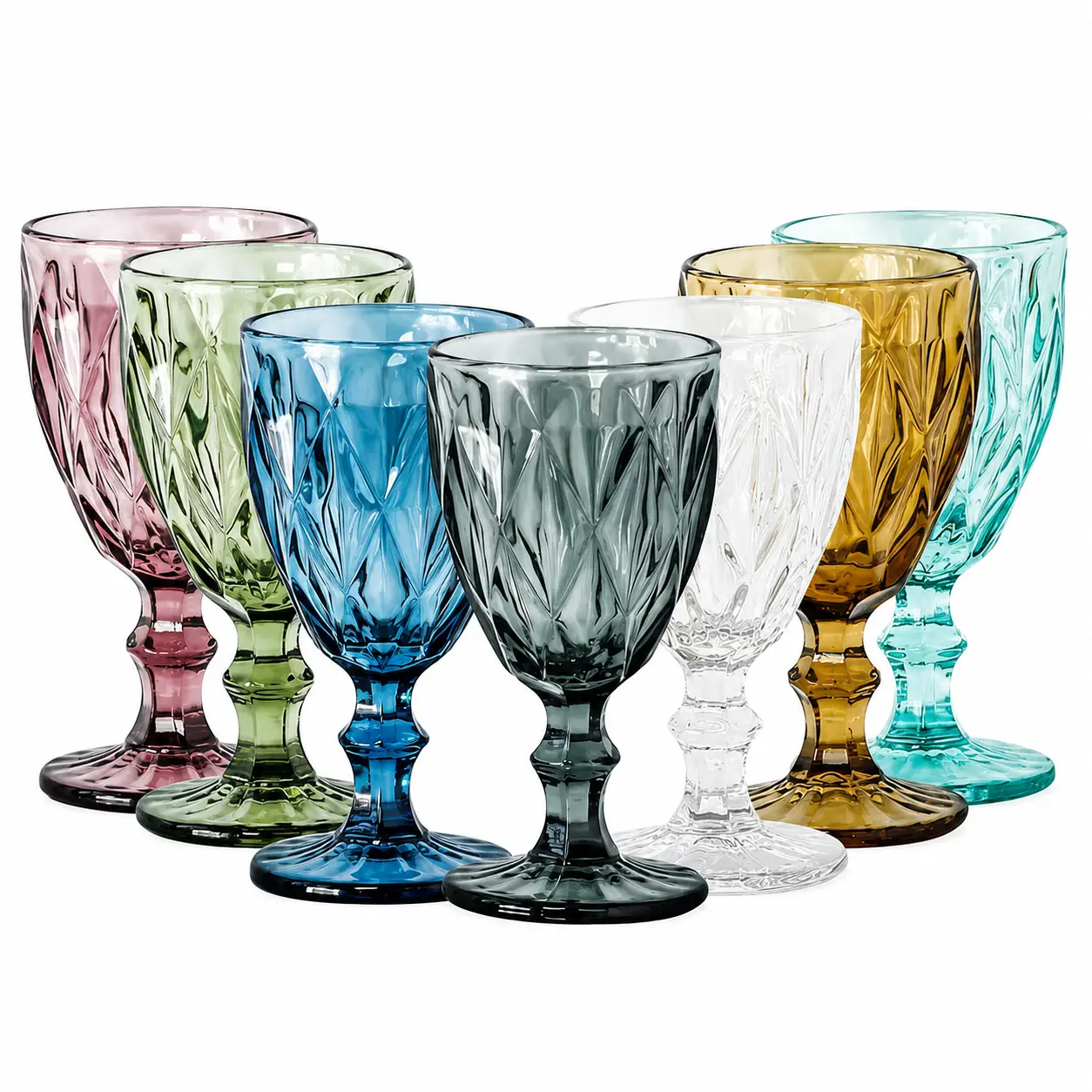
When Does the Mixed-SKU Model Win?
Three situations, all common:
- You sell to retail and need facings, not depth. A retail buyer who needs six SKUs on the shelf gains nothing from a container of one. The retailer program is built for exactly this — barcoded, color-boxed, planogram-ready.
- No single SKU clears a container on its own. If your best item moves 15,000 pieces per quarter and a container holds 60,000, the single-SKU model leaves you warehousing nine months of stock. The mix lets the container ship on your sales calendar, not the factory’s.
- You are testing or expanding categories. Adding bakeware to a storage program, or drinkware to a lunch-box line, is low-risk inside a mix — a few thousand pieces to validate demand. As a standalone container it would be an irresponsible bet.

When Does the Full Container Win?
Two situations, both legitimate:
- One SKU genuinely moves container volumes. If you reorder the same 40HQ of one lunch box every 60 days, the mixed model adds planning overhead for no benefit. Long production runs also shave unit cost — on true volume, that matters.
- The item’s economics demand maximum efficiency. Thin-margin, high-competition items where pennies per unit decide the listing — here the single-SKU container’s production and freight efficiency is the whole game.
Be honest about which situation you are in. We have watched buyers order single-SKU containers of items that move 20,000 pieces a year “because the unit price was better” — then pay warehousing on the remaining 40,000 for eighteen months. The cheaper unit price was the most expensive decision in the program.
How Do the Costs Actually Compare?
The freight side first, because it surprises people: container freight is fixed whether the box holds one SKU or ten. A 20GP from China to your port costs the same either way. So per-unit freight is nearly identical between the models at equal container utilization — the mixed load does not pay a freight penalty. Where the models differ:
- Production cost per unit: single-SKU runs slightly cheaper (fewer changeovers, longer runs). On most glassware this is a small single-digit percentage difference — real, but rarely decisive.
- Packaging: mixed loads with per-SKU packaging routes (color box here, gift box there) carry more packaging SKUs to manage. A single-SKU container runs one box design at scale.
- Inventory carrying cost: this is where mixed usually wins big. Warehousing 40,000 unsold pieces of one SKU for a year costs more than any production saving. The mix spreads the risk.
We quote both models with the loading plan attached — quantities, cartons and per-unit freight — so the comparison uses your numbers, not generalities. Ask for both quotes on your next program and compare them line by line.
The Math That Decides: A Worked Example
Consider an importer with three SKUs — a 1000ml rectangular container, a 1500ml square container, and a 6-piece drinkware set — expecting to sell roughly 12,000 pieces of each per quarter. A 20GP holds about 28,000–32,000 pieces of this mix. The single-SKU route means ordering 30,000 pieces of one item — two and a half quarters of stock for that SKU — while the other two sit at zero. The mixed route fills the same 20GP with 10,000 pieces of each, matching one quarter of demand across the full assortment. Container freight is identical either way: the ship charges by the box, not by what is inside it. The mixed route typically saves 40–60% on inventory carrying cost in the first year — far more than the small per-unit production saving from running one item at scale. If one SKU alone can fill a 20GP and sell through within 90 days, single-SKU wins. If not, mixing wins.
New Production vs Stock: How MOQ Changes the Decision
The mixed-vs-single decision interacts with a second question: are you buying from stock or ordering new production? Stock items can be mixed across SKUs with a minimum of one 20GP container. You pick from our 4,000+ ready-stock models, split the container across 2–8 SKUs, and ship in 30–45 days. For stock programs, the mixed model is almost always the right call when you need assortment. New production is different: a single cup style requires 80,000 pieces to start production — roughly one 40HQ container. If you need a custom size, a new mold, or a private-label color not in stock, you must commit to 80,000 pieces of that one style. At that volume, single-SKU is not a choice — it is the only option for that item. Rule of thumb: below 80,000 pieces per SKU, buy stock and mix. Above it, new production and single-SKU become viable.

Not Sure Which Model Fits?
Send your volume estimates — we model both and show you the per-unit landed math side by side.
What Changes by Buyer Type?
The right model depends partly on who you sell to:
- Retail chains and their distributors: almost always mixed. Shelf programs need assortment; the retailer page covers the barcode and packaging specifics.
- E-commerce sellers: usually mixed — bundling complementary SKUs (storage + lids + prep) lifts average order value, and no single listing justifies a container.
- Foodservice and wholesale distributors: split. High-turnover basics (one lunch box size to hundreds of outlets) can justify single-SKU; the rest of the catalog rides mixed.
- Importers in smaller markets: almost always mixed. A full container of one SKU can exceed a small market’s annual demand for that item.
Common Mistakes Importers Make When Choosing
Three mistakes recur:
- Chasing the lowest unit price. A single-SKU container is typically a few percent cheaper per unit. Buyers fixate on that gap and ignore the warehousing cost of 40,000 unsold pieces. On a $1.50 item, a 5% saving is $0.075 per unit — against $144,000 to warehouse 40,000 pieces for a year.
- Mixing too many SKUs. The mixed model works best at 2–8 SKUs per container. Beyond 10, the loading plan becomes fragile: carton counts get thin, picking errors rise, and per-SKU quantity may fall below what justifies its own packaging run. A 40HQ can hold 10+ standard SKUs, but “can” is not “should.”
- Ignoring per-SKU packaging minimums. Each SKU needs its own packaging route. If one SKU only needs 500 pieces but the color-box printer requires a 2,000-box minimum, that SKU either pays for 1,500 unused boxes or switches to a stock packaging route. We flag this during loading-plan review.
How to Transition Between Models
The choice is not permanent. Most programs evolve: start mixed, then graduate proven SKUs to single-SKU containers as volume grows. A buyer might launch with a 20GP mixed across six SKUs, discover two SKUs each sell 30,000 pieces per quarter, and move those two to dedicated 40HQ single-SKU containers — while the remaining four stay in a mixed 20GP. The reverse also works: if a single-SKU item slows down, fold it back into a mixed load. We keep your program on file so the transition is a planning change, not a restart.
Frequently Asked Questions
Can I switch models between orders?
Yes. Many buyers run mixed for the first container (to validate the assortment) and switch proven SKUs to single-SKU containers on reorder. We keep your program on file so the transition is a planning change, not a restart.
Does the mixed model cost more per unit?
Slightly on production (changeovers), negligibly on freight at equal utilization. The inventory-risk saving usually dwarfs both. Ask for both quotes modeled on your volumes — the numbers decide, not the theory.
What is the minimum for each model?
Both start at 1 × 20GP. The mixed model splits that container across SKUs; the single-SKU model fills it with one item. Lead time is 30–45 days either way.
Can I mix packaging types in a mixed container?
Yes — color box, white box, kraft and gift box routes coexist in one load, planned per SKU. Our packaging options page details each route.
Which model is better for private label?
Both work. Mixed lets you private-label selected SKUs while others ship standard; single-SKU is simpler when the entire container carries your brand. The deciding factor is volume per branded SKU, not the model itself.
How do I decide if my volume justifies single-SKU?
Rule of thumb: if one SKU’s 90-day sales fill a 20GP, go single-SKU for it. If not, mix. When between, we model both — the per-unit landed comparison usually makes the answer obvious.
Related Reading
- Mixed SKU Glassware — the pillar page for container-mix programs
- Small-Batch Mixed Glassware — flexible quantities inside one container
- Mixed SKU for Retailers — shelf-ready assortments
- Borosilicate vs Soda-Lime vs Plastic — the material decision behind the program
Model Both, Then Decide
Send your SKU list and volume estimates — we return both models with per-unit landed math. Free, no commitment.