

Short answer: send an item list, get a loading plan, approve it, and we handle the rest. A mixed-SKU glassware container is planned in five steps — list, carton math, zone loading, QC per SKU, and freight allocation — and every step happens before production starts, not during loading. Total timeline: 30–45 days from confirmed order to shipment. This guide is written for buyers placing their first mixed container as well as experienced importers tightening their process.
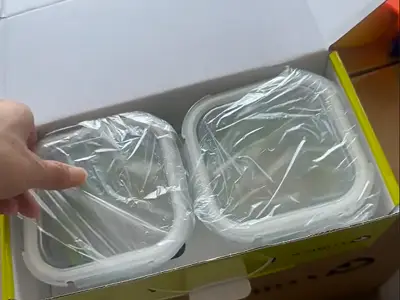
Step 1: Build the Item List
Everything starts with your list. For each SKU, we need four data points:
- What it is: product type and size (e.g., 6-pc cup set, 1.5L storage jar, rectangular lunch box 1040ml).
- Lid system: snap-lock, silicone-seal, bamboo, vented, or open — lids change carton height and weight.
- Packaging route: retail color box, gift box, or bulk pack — different carton strengths need different stacking zones.
- Quantity signal: target quantities or ratios (e.g., “twice as many cup sets as pitcher sets”).
Photos or spec sheets speed this up enormously. If you’re working from our program pages — drinkware sets, bowls and jars, food storage, bakeware — just list the page plus the SKUs you want from each.

Step 2: Carton Math — Does Each SKU Pack Efficiently?
Before anything ships, each SKU has to carton well on its own. We check: pieces per master carton, carton dimensions, gross/net weight, and whether the SKU’s quantity divides into full cartons without awkward remainders. A SKU that leaves half-empty cartons wastes the space it was supposed to save.
This is also where we catch the classic mixed-load mistake — quantities too small to carton. If you want 200 units of a SKU that cartons 48 to a master, that’s four cartons plus a partial. We’ll tell you, and suggest rounding to the efficient quantity. The MOQ is one 20GP for the program; per-SKU quantities just need to make carton sense. Our mixing primer covers the economics behind this.
| Check | What we verify | Why it matters |
|---|---|---|
| Pieces per carton | Count, dividers, orientation | Determines SKU quantity granularity |
| Carton dimensions | L × W × H per master | Feeds the stacking plan |
| Weight per carton | Gross / net | Weight distribution across zones |
| Remainder check | Full cartons vs partials | Partials waste space and crush easier |
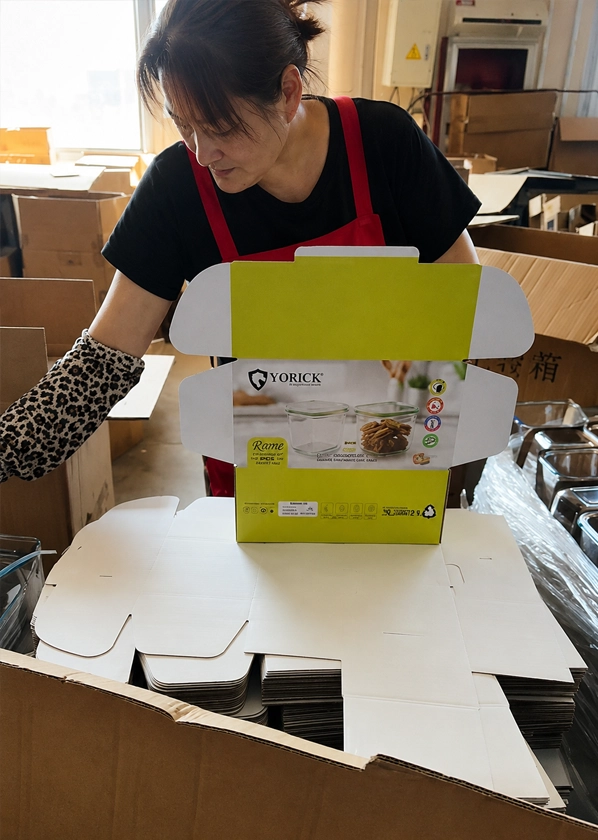
Step 3: The Loading Plan — Zones, Not Piles
The loading plan is the document that makes a mixed container work. It assigns every carton to a zone:
- Lower zone: dense, heavy cartons — bulk-packed tumblers, jars, bakeware. The foundation.
- Mid zone: standard masters — bowl sets, lidded containers, divided cartons.
- Upper zone: lighter retail-boxed cartons — color-box drinkware sets, gift-box pitcher sets, PDQ shippers.
- Divider protocol: where footprints differ between adjacent SKUs, corrugated dividers prevent shifting and point-loading.
The plan also sequences loading order — what goes in first (deepest) versus last — so the warehouse crew executes the engineering, not improvisation. You approve this plan before production. If a SKU’s quantity changes later, we re-run the math rather than squeezing.
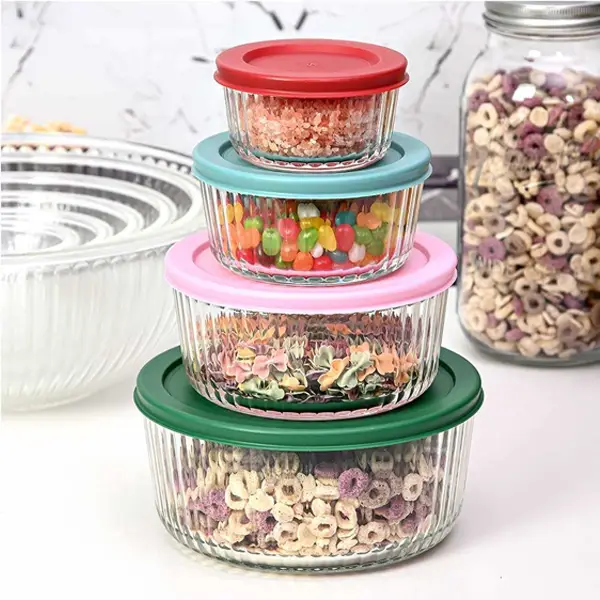
Step 4: Production and Per-SKU QC
Production runs per SKU, sequenced so the longest-lead item starts first. The 30–45 day clock covers the full mix — mixed loads don’t take longer than single-SKU containers, they just need the item list earlier for sequencing.
QC is per SKU, never averaged:
- 100% visual inspection for clarity, bubbles, stones and rim finish on finished glassware.
- Functional checks per category: lid fit and seal on jars and containers, base stability on bowls and drinkware, decoration adhesion on printed items.
- Pre-load verification: carton counts reconciled against the loading plan before a single carton enters the container.
Want Us to Plan Your Load?
Send the item list — we return quantities per SKU, stacking zones and per-unit freight before quoting.
Step 5: Freight Allocation and the Quote
The quote you receive has two parts: per-SKU pricing (unchanged by mixing) and the loading plan with freight allocated per SKU by carton count and volume share. This is the number that matters — compare suppliers on landed cost per SKU, not FOB.
A worked example of the logic (illustrative, your plan carries exact figures):
| SKU | Cartons | Share of container | Freight share |
|---|---|---|---|
| Cup sets (retail box) | 120 | 30% | 30% of total freight ÷ units |
| Storage jars (bulk) | 140 | 35% | 35% of total freight ÷ units |
| Pitcher sets (gift box) | 80 | 20% | 20% of total freight ÷ units |
| Bowls, assorted | 60 | 15% | 15% of total freight ÷ units |
Dense SKUs (jars) carry more freight share but also more units per carton — the per-unit math usually favors them. Light bulky SKUs (gift boxes) carry less share but fewer units. The plan shows you both sides so there are no surprises.
Container Sizes: 20GP vs 40GP vs 40HQ
Choosing the right container size is the first decision in any mixed-SKU program. The three standard dry containers used for glassware export differ in volume, not just length — and the choice affects both per-unit freight and how many SKUs you can mix efficiently.
| Container | Internal dimensions (L × W × H) | Usable volume | Best for mixed SKU |
|---|---|---|---|
| 20GP | 5.90 m × 2.35 m × 2.39 m | ~33 CBM | First mixed order, 4–6 SKUs, test assortments |
| 40GP | 12.03 m × 2.35 m × 2.39 m | ~67 CBM | Established programs, 6–10 SKUs, balanced weight |
| 40HQ | 12.03 m × 2.35m × 2.69 m | ~76 CBM | Light bulky SKUs (gift boxes, PDQ), 10+ SKUs |
The 40HQ adds roughly 13% more volume than the 40GP for the same footprint — the extra height matters when your mix includes tall retail boxes or PDQ shippers. For dense glassware (jars, tumblers, bakeware), the 20GP or 40GP is usually sufficient; weight, not volume, becomes the constraint.
Our MOQ is one 20GP for a mixed-SKU program. A single 40HQ can hold 10+ standard SKUs when the mix is planned correctly — for example, a combination of food storage containers, bakeware, bowls with lids, and drinkware sets, each in its own retail packaging, with carton counts balanced so no SKU leaves partial cartons. The loading plan shows you exactly how many cartons of each SKU fit in your chosen container before you commit to production.
When comparing quotes, always confirm which container size the freight is based on. A supplier quoting “per container” without specifying 20GP vs 40HQ is not giving you a comparable number.
Common Mistakes to Avoid
- Adding SKUs after production starts: the plan is engineered; late additions re-open carton math and can shift the ship date. Finalize the list before we cut the first PO.
- Ignoring lid height: the same bowl with a snap lid vs a bamboo lid is a different carton. Confirm lids per SKU at Step 1.
- Comparing FOB without the loading plan: two identical FOBs can land 15–20% apart once freight allocation differs. Always ask for the plan.
- Skipping the remainder check: partial cartons crush first. Round quantities to full cartons wherever the program allows.
- Forgetting the paperwork timeline: barcodes, warning labels and food-contact documents are verified per SKU before production. A label correction after cartons are packed means re-packing — build two weeks of paperwork buffer into your 30–45 day expectation for first-time programs.
- Mixing without a zone strategy: “just fill the container” is how breakage happens. The zone plan (heavy low, light high, dividers between footprints) is not optional for glassware — it’s the difference between 0.5% and 5% breakage.
For material decisions that affect the plan (borosilicate vs soda-lime changes weight and handling), see our material comparison.
Loading Day: What Happens at the Warehouse
On loading day, the plan meets reality. Here is what happens at our Fengyang warehouse, step by step:
- Container inspection: Before any carton moves, the container is checked for cleanliness, dryness, structural damage, and door seal integrity. A container with a leaking roof or a damaged floor is rejected — glassware cannot risk water damage or contamination during a 30-day ocean transit.
- Carton staging by zone: Cartons are staged in loading order — lower-zone cartons (heavy, dense) closest to the container, upper-zone cartons (light, retail-boxed) furthest. Each SKU’s cartons are grouped together and counted against the loading plan before loading begins.
- Loading sequence: The crew loads deepest first, following the zone plan. Heavy cartons form the foundation layer. Dividers go in where footprints change between adjacent SKUs. The loading supervisor checks the plan at each zone boundary — this is the point where errors are caught, not after the doors close.
- Photo documentation: Photos are taken at 25%, 50%, 75%, and 100% loaded, plus a final shot of the sealed container with the seal number visible. You receive these photos with your shipping documents — they are your evidence if a claim arises.
- Final reconciliation and sealing: Carton counts are reconciled one last time against the loading plan. The container doors close, the seal is applied, and the seal number is recorded on the packing list and bill of lading. Once sealed, the container goes directly to the port — no reopening, no repacking.
The entire loading process for a mixed-SKU container takes 2–4 hours depending on SKU count and carton volume. Rushing this step is the fastest way to create breakage — a properly loaded glassware container should arrive with breakage below 0.5%.
Why XSD Glass
XSD Glass operates from Fengyang Industrial Zone, Bengbu City, Anhui — China’s glassware manufacturing hub — on automated press lines producing 800,000+ pieces a day. With 10+ years of FCL export experience serving buyers in 30+ countries, our ISO 9001 and BSCI-audited facility runs 4,000+ ready-stock models backed by thousands of self-owned molds.
We have supplied major trading houses including Garbo — the kind of volume buyer that audits factories before placing orders. When you work with XSD Glass, you buy factory-direct from Bengbu with no middlemen: FOB pricing, stable 30–45 day lead times, and a Key Account Manager (Suzy, 15 years in glassware export) who answers on WhatsApp.
- ✓ 800,000+ pcs/day on automated press lines — capacity for chain-store programs
- ✓ 4,000+ ready-stock models — mix 10+ standard items in one 40HQ
- ✓ Samples in 3–5 days via DHL/FedEx — mass production in 30–45 days
- ✓ ISO 9001 & BSCI audited — the same compliance bar major trading houses require
Frequently Asked Questions
How many SKUs can go in one mixed container?
Typically 4–10 SKUs per 20GP depending on sizes. No hard limit — each SKU just needs to carton and stack efficiently. See which combinations work.
Who makes the loading plan?
We do, before quoting. You send the item list; we return quantities per SKU, carton configuration, stacking zones and per-unit freight.
How long does a mixed container take?
30–45 days from confirmed order. The longest-lead SKU sets the ship date.
What do you need to plan my load?
Item list with sizes, lid types, packaging route per SKU, target market, and any time-critical SKUs. Start with drinkware or bowls and jars if you’re building around those.
Can the mix change after ordering?
Small quantity adjustments before production starts per SKU are usually fine. Structural changes after production begins may move the ship date — flag early.
Start With the Item List
The entire process starts with four data points per SKU: what, which lid, which packaging, how many. Send that and we return a loading plan — quantities, zones, freight per unit — before any pricing discussion.