
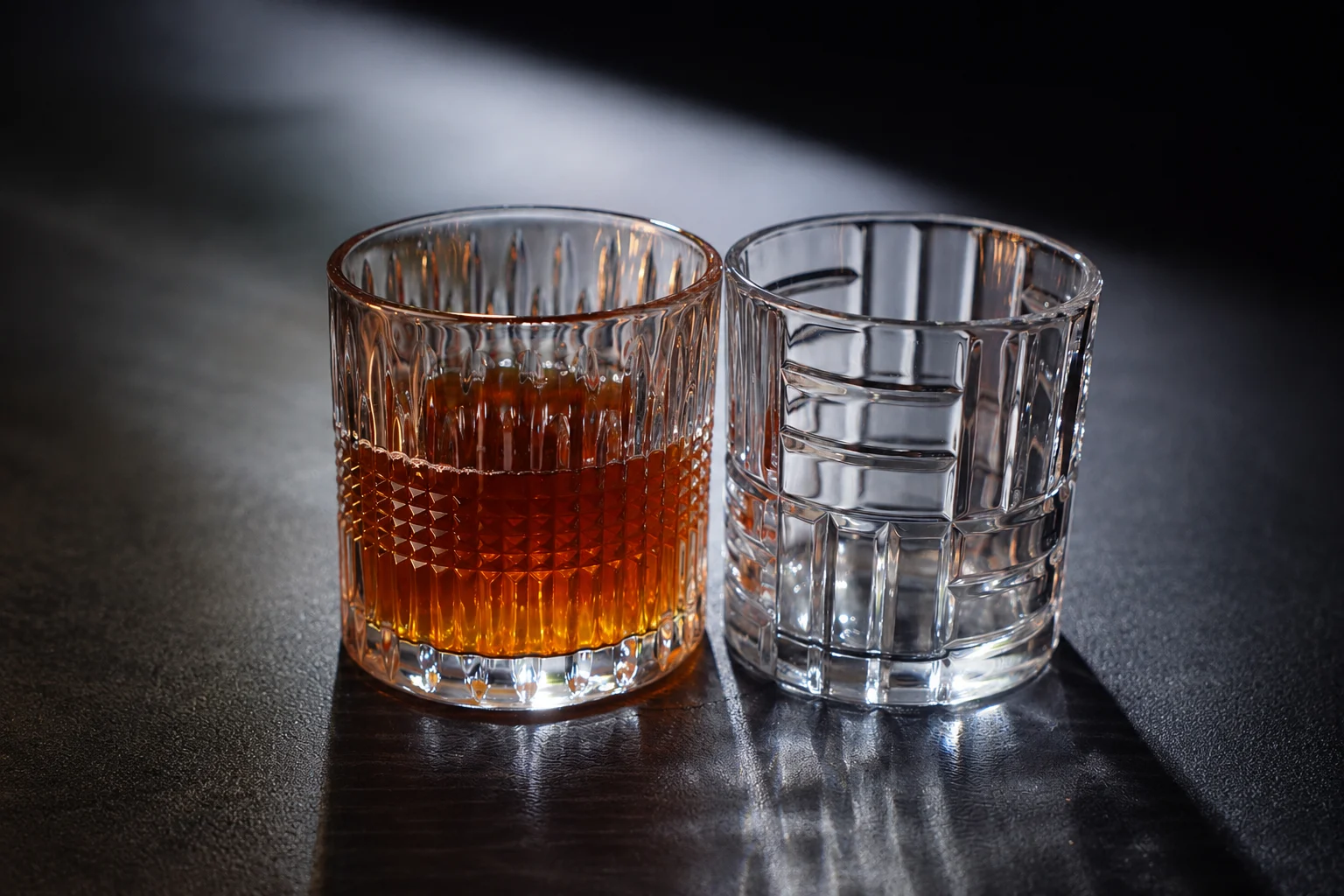
Short answer: yes — and most experienced importers do. Our MOQ is one 20GP container, single SKU or mixed. In practice, very few buyers fill a container with one item. A typical load combines drinkware sets, bowls, jars or food storage containers so the freight cost spreads across a sellable retail assortment instead of one slow-moving SKU. Lead time stays 30–45 days whether you mix or not.

How Does a Mixed-Glassware Container Load Work?
You send an item list — product types, sizes, lid options, packaging route per SKU — and we return a loading plan before quoting. The plan fixes three things up front: quantities per SKU that carton efficiently, the carton configuration (master cartons, dividers, pallet pattern), and the per-unit freight math per SKU. The container is engineered as one program, not as several small orders stapled together.
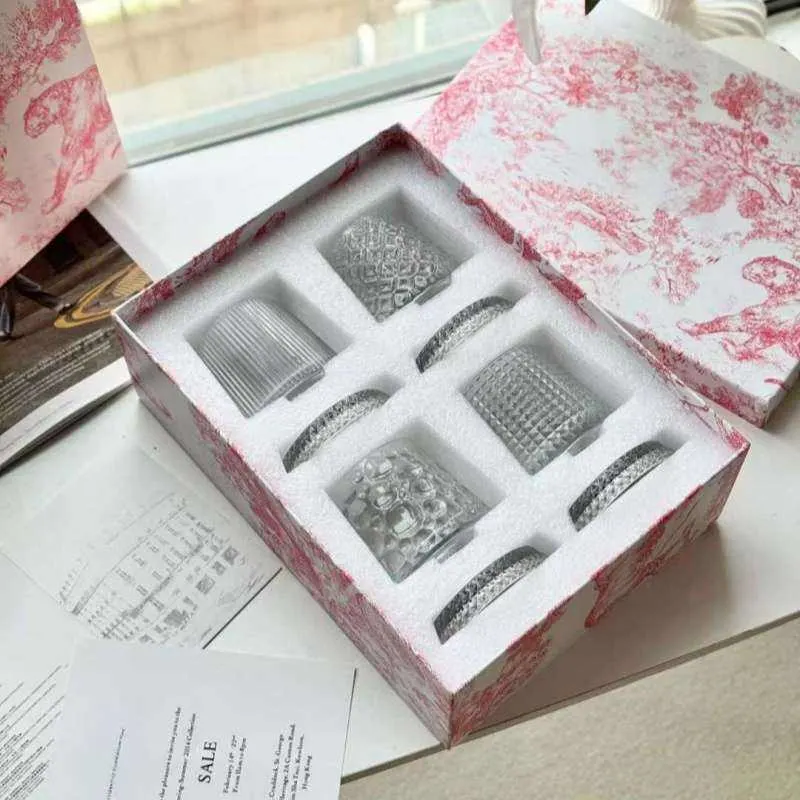
Why the plan matters: glassware categories have different carton footprints, weights and breakage profiles. A mixed drinkware set ships in retail color boxes; bowls and jars may ship bulk or boxed; food storage containers come with lid systems that change the carton height. The loading plan reconciles all of it — heavier bakeware low, lighter storage high, dividers where footprints differ — so the mix arrives intact instead of shifting in transit.
Which Combinations Work Well Together?
Most combinations buyers propose work fine. The table below covers the mixes we plan most often and what each one needs:
| Combination | Works? | What to plan for |
|---|---|---|
| Drinkware sets + bowls + jars | Yes — very common | Separate by carton strength; retail-boxed sets stack above bulk cartons |
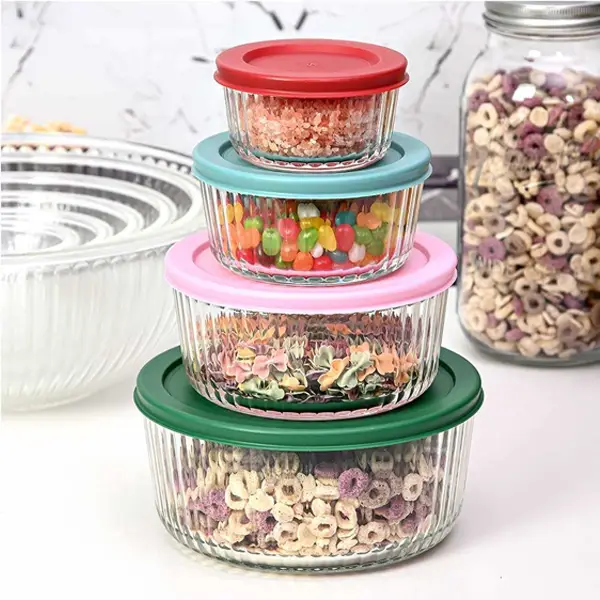
| Food storage containers + bakeware | Yes — common | Bakeware goes low (heavier); lid systems change carton height, confirm per SKU |
| Several sizes of one family | Yes — easiest mix | Nesting where possible; confirm each size cartons efficiently on its own |
| Same body, different lid systems | Yes | Snap-lock vs bamboo lids change height and weight — plan per lid variant |
| Retail color-box + bulk pack | Yes, with planning | Different carton strengths; stacking plan separates the two zones |
| Large fragile bakeware + dense small items | Ask first | Usually solvable with dividers and zone loading — flag it up front |
The rule of thumb: if the items share a target market and a delivery window, they can almost always share a container. Our container loading guide walks through the full planning sequence step by step.

What Does Mixing Do to Pricing and Freight?
Per-SKU pricing doesn’t change when you mix — each item costs what it costs to make. What changes is the freight economics. One 20GP split across six SKUs gives each SKU a per-unit freight cost far below what a small single-item shipment would bear. That’s the entire business case for the mixed load.
This is why we quote mixed loads with a loading plan attached: quantities per SKU, carton count, and the freight split per unit. Compare programs on landed cost per SKU, not on FOB alone — two suppliers with identical FOB can land very differently once the container math is in. For the material cost side, our borosilicate vs soda-lime vs plastic comparison breaks down which body glass fits which price tier.

What About Lead Time, QC and Paperwork on a Mixed Load?
Lead time is 30–45 days for mixed loads, same as single-SKU containers. Production is scheduled across all SKUs in the mix; the longest-lead item sets the ship date. Tell us about time-sensitive SKUs up front so we sequence production accordingly.
Quality control is checked per SKU, not per container — each item goes through its own inspection against its spec before loading. Mixed loads don’t dilute QC; they multiply the checkpoints.
Paperwork is also per SKU: barcodes, warning labels, and food-contact documentation are verified item by item, because one mislabeled SKU can hold the entire container at customs. Send your labeling requirements with the item list so we check compliance before production, not at the port.
For program structure ideas, see our lunch box program and meal prep container program pages — both are built around mixed-SKU ordering.
How Many SKUs Can You Fit in One Container?
There is no fixed ceiling, but practical limits come from carton efficiency, not from the container itself. A 20GP container holds roughly 28 CBM of cargo; a 40HQ holds roughly 68 CBM. The question is how many distinct SKUs can share that space while each one still cartons efficiently.
In practice, most mixed programs run 2–8 SKUs per container. A 40HQ can comfortably carry 10+ standard SKUs — for example, four food storage sizes, two bakeware dishes, two bowl sizes, and two drinkware sets — because each SKU contributes enough cartons to fill its zone. Below about 100 cartons per SKU, the per-unit freight advantage starts to thin out: the SKU occupies loading-plan overhead without contributing enough volume to justify its slot.
| Container | Typical SKU count | Best for |
|---|---|---|
| 20GP (~28 CBM) | 2–5 SKUs | First orders, seasonal tests, small retail assortments |
| 40GP (~54 CBM) | 4–8 SKUs | Established programs, mid-size retail chains |
| 40HQ (~68 CBM) | 6–10+ SKUs | Full-line distributors, chain-store rollouts |
The 40HQ is the most cost-efficient mixed load: per-CBM freight is lowest, and the extra height accommodates more carton layers without changing the loading pattern. If your program has 8 or more SKUs, the 40HQ is almost always the better choice — compare the per-unit landed cost across container sizes before deciding. Our mixed SKU vs full container comparison breaks down the trade-offs in detail.
Step by Step: From Item List to Shipped Container
A mixed container follows the same production timeline as a single-SKU order — 30–45 days — but the planning phase is more detailed. Here is the sequence:
Step 1 — Send your item list. Include product types, sizes, lid options, and packaging route per SKU (retail color box, kraft box, or bulk). If you have target retail prices or a budget ceiling, include that too — it helps us flag SKUs that will not land profitably before you commit.
Step 2 — Receive the loading plan. Within 1–2 working days, we return a plan showing quantities per SKU, carton counts, pallet pattern, and per-unit freight math. Check it against your shelf-space and cash-flow constraints before approving.
Step 3 — Confirm samples. Samples for standard SKUs ship in 3–5 days via DHL or FedEx. For mixed programs, we recommend sampling at least one SKU per category (one storage, one bakeware, one drinkware) so you can verify the packaging and labeling quality across the range, not just one item.
Step 4 — Production. All SKUs are produced in parallel on our automated press lines (800,000+ pcs daily output). The longest-lead SKU sets the ship date. We update you at the 50% and 90% marks so there are no surprises.
Step 5 — QC, loading, and documents. Each SKU is inspected against its own spec before loading. The container is loaded to the plan, photographed, and sealed. You receive the packing list, commercial invoice, and bill of lading with full SKU-level breakdown per model — one set of documents for the whole container.
The full planning sequence, including carton configurations and stacking diagrams, is covered in our container loading guide.
Common Mistakes to Avoid When Mixing Glassware
Mistake 1 — Mixing too many SKUs with too few cartons each. A container with 15 SKUs at 20 cartons each looks diverse on paper, but each SKU’s per-unit freight is barely better than air freight. Consolidate to 4–8 SKUs with meaningful quantities.
Mistake 2 — Ignoring carton footprint differences. A tall pitcher carton and a flat bakeware carton do not stack together. If you skip the loading plan, cartons shift in transit and breakage spikes. Always load to a plan that accounts for footprint and weight zones.
Mistake 3 — Mixing retail and bulk packaging without a divider strategy. Color-box cartons are lighter and crush more easily than bulk cartons. Without dividers and zone separation, the bulk cartons crush the retail cartons during ocean transit. Flag this combination up front so we plan the stacking.
Mistake 4 — Forgetting label compliance per SKU. One mislabeled SKU — wrong barcode, missing food-contact declaration, incorrect country-of-origin mark — can hold the entire container at customs. Send labeling requirements with the item list, not after production starts.
Mistake 5 — Comparing suppliers on FOB alone. Two suppliers can quote the same FOB and land at very different costs once container utilization, carton efficiency, and breakage rates are factored in. Always compare on landed cost per SKU, using the loading plan as the basis.
Avoiding these five mistakes covers most of the risk in a mixed load. The rest is execution: a solid loading plan, per-SKU QC, and a supplier with enough production capacity to run all SKUs in parallel without delaying the ship date.
Planning a Mixed Glassware Container?
Send your item list — we return a loading plan with quantities per SKU and per-unit freight math.
Why XSD Glass
XSD Glass operates from Fengyang Industrial Zone, Bengbu City, Anhui — China’s glassware manufacturing hub — on automated press lines producing 800,000+ pieces a day. With 10+ years of FCL export experience serving buyers in 30+ countries, our ISO 9001 and BSCI-audited facility runs 4,000+ ready-stock models backed by thousands of self-owned molds.
We have supplied major trading houses including Garbo — the kind of volume buyer that audits factories before placing orders. When you work with XSD Glass, you buy factory-direct from Bengbu with no middlemen: FOB pricing, stable 30–45 day lead times, and a Key Account Manager (Suzy, 15 years in glassware export) who answers on WhatsApp.
- ✓ 800,000+ pcs/day on automated press lines — capacity for chain-store programs
- ✓ 4,000+ ready-stock models — mix 10+ standard items in one 40HQ
- ✓ Samples in 3–5 days via DHL/FedEx — mass production in 30–45 days
- ✓ ISO 9001 & BSCI audited — the same compliance bar major trading houses require
Frequently Asked Questions
What is the minimum order for a mixed glassware container?
One 20GP container, single or mixed SKU. There is no per-SKU minimum beyond what loads sensibly — we will tell you if a SKU’s quantity is too small to carton efficiently.
Can I mix glass drinkware sets with food storage containers?
Yes. Drinkware sets, bowls, jars and food storage containers are routinely combined in one load. The loading plan separates them by carton strength and breakage zone.
Does mixing SKUs delay the shipment?
No. The standard 30–45 day lead time covers mixed loads. Production is scheduled across all SKUs, with the longest-lead item setting the ship date.
Can I mix retail color-box items with bulk-packed items?
Yes, with a stacking plan that accounts for different carton strengths. Heavier bulk cartons go low, retail color-box cartons high, with dividers where footprints differ.
How is freight calculated per SKU in a mixed container?
Total container freight is split across SKUs by carton count and volume share. Every mixed-load quote includes a loading plan showing quantities per SKU and the resulting per-unit freight.
Can I mix borosilicate and soda-lime glassware in one container?
Yes. The materials ship together without issue — the choice is about program positioning. Our material comparison explains which body glass fits which tier.
Get a Mixed-Container Loading Plan
Tell us your item list, target market and whether the program is private label or open stock. We will return a loading plan — quantities per SKU, carton configuration, per-unit freight — before quoting, so you can evaluate the program on landed cost.