Short answer: yes to both. 3.3 borosilicate glass is dishwasher-safe and microwave-safe — it doesn’t cloud, warp or retain odors the way plastic does. The caveats are all about the lids: PP lids prefer the top rack and should be vented (or removed) in the microwave, and bamboo lids shouldn’t go in the dishwasher at all.
Is Borosilicate Glass Dishwasher Safe?
Yes. Glass is one of the few food-container materials that comes out of the dishwasher looking the same as it went in — no staining, no odor retention, no warping. Two practical notes from programs we’ve seen:
- The glass body: any rack, any normal cycle. Borosilicate doesn’t care about dishwasher heat.
- PP snap-lock lids: top rack is kinder — heating elements at the bottom of some machines run hotter than the rated cycle.
- Silicone seals: dishwasher-safe, but pull them out of the lid groove occasionally and wash the groove — that’s where odors hide.
- Bamboo lids: hand-wash only. Dishwasher heat and prolonged water exposure crack and warp wood.
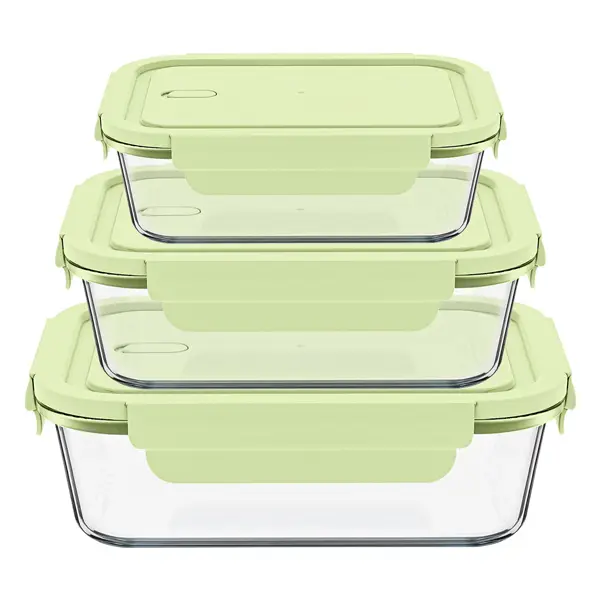
Is Borosilicate Glass Microwave Safe?
Yes — glass is naturally microwave-transparent, so it heats the food, not the container. The rules:
- Vent or remove the lid. Sealed containers build steam pressure; a vented lid or a lid set ajar solves it.
- No metal parts. Obvious, but worth stating for sets with metal clasps — keep metal out of the microwave.
- Handle with care after heating. Borosilicate holds heat well, which is the point — use the lid or a cloth, not bare hands on a just-heated container.
Note the difference from oven use: microwaves heat food (and through it, the glass) gradually and evenly, so thermal shock is rarely a concern here. Ovens are stricter — see can borosilicate glass lunch boxes go in the oven?
Does Dishwasher Use Cloud Borosilicate Glass Over Time?
Not the way it clouds plastic. What buyers sometimes call “clouding” on glass is usually one of two things:
- Hard-water film — mineral deposits from the wash, removable with vinegar. It’s on the glass, not in it.
- Etching from harsh detergent — aggressive in very soft water over very many cycles. Rare in normal programs, and far slower than plastic degradation.
This is actually a selling point worth putting on retail packaging: hundreds of dishwasher cycles with no staining is something plastic programs can’t promise.
What About the Lids — Which Survive Daily Dishwasher and Microwave Routines?
- PP snap-lock: the workhorse — dishwasher top-rack safe, microwave-safe when vented.
- Silicone-seal locking: best for leak resistance; seals are dishwasher-safe, frames follow PP rules.
- Vented steam-release: designed for microwave reheating — the vent is the feature.
- Bamboo: hand-wash, no microwave. Position it as the premium dry-storage option, not the daily reheating one.
Matching lid to routine is half of program design — our containers with lids page breaks down the four systems.

Building a Daily-Use Container Program?
Dishwasher-proof bodies, microwave-sensible lids — see our wholesale food storage line.
Frequently Asked Questions
Can plastic lids go in the dishwasher?
Food-grade PP lids: yes, top rack preferred. Check your supplier’s rating — thin, cheap PP warps faster than the thicker frames used in wholesale programs.
Can I put a glass container with a plastic lid in the microwave?
Yes if the lid is vented or set ajar. Fully sealed + steam = pressure. When in doubt, take the lid off.
Is it safe to reheat tomato sauce in glass?
Yes — and this is where glass beats plastic: tomato and curry stain plastic permanently but wash off borosilicate completely.
Do silicone seals absorb odors?
Far less than plastic, but seals can pick up strong odors over time. A baking-soda soak refreshes them; they’re also replaceable in most locking-lid designs.
Can borosilicate glass go in the oven too?
Yes, within the rules — glass body only, lids off, respect the thermal-shock limit. Full breakdown: can borosilicate glass lunch boxes go in the oven?
How do I verify a supplier’s “dishwasher-safe” claim?
Ask what it was tested against — body only or the full set including lids. And confirm the glass is actually borosilicate: how to tell borosilicate from soda-lime glass.
Need a Daily-Use Container Program?
Tell us the reheating routine your buyers expect and whether the program is private label or open stock — we’ll match the body, lid system and packaging before quoting.