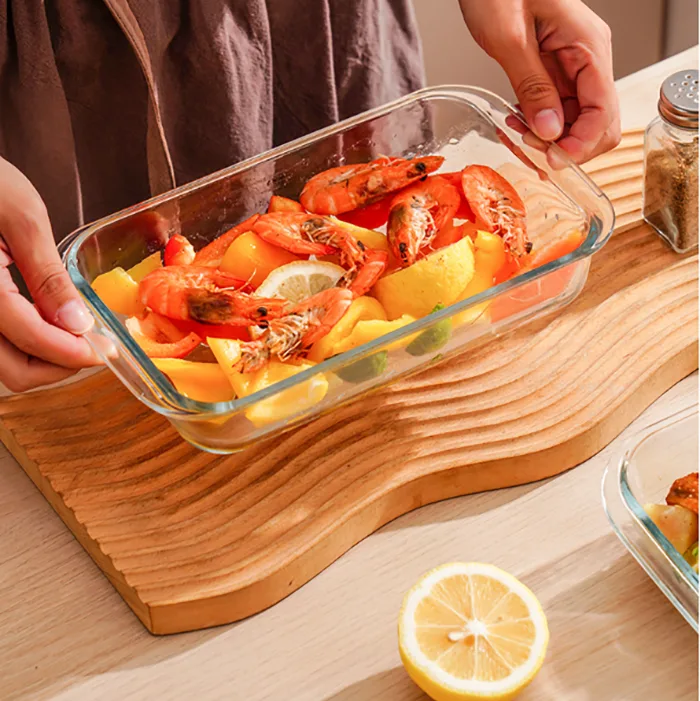
Short answer: yes — the glass body of a borosilicate lunch box is oven-safe. 3.3 borosilicate glass is rated for a working range of -20°C to 400°C, so it handles conventional ovens without the cracking risk of ordinary glass. Two rules decide whether your lunch box can go in: remove any plastic or bamboo lid before heating, and respect the ~120°C thermal-shock limit — don’t move it straight from a -18°C freezer into a 200°C oven.
What Parts of a Glass Lunch Box Can Go in the Oven?
Only the glass body. That sounds obvious, but most “is it oven-safe” failures we hear about are lid failures, not glass failures:
- Glass body (borosilicate 3.3): yes — oven, microwave and freezer safe within -20°C to 400°C.
- PP snap-lock lids: no — remove before oven heating. Most food-grade PP softens well below oven temperatures.
- Silicone-seal locking lids: the silicone seal tolerates heat better than the PP frame, but the lid as a unit should still come off in the oven.
- Bamboo lids: never — wood chars and dries out.
If your program promises “oven-safe” on the box, make the packaging say glass body oven-safe and show the lid removed. That one word prevents most buyer complaints.
How Hot Can Borosilicate Glass Actually Get?
Two numbers matter, and buyers often confuse them:
- Working range: -20°C to 400°C. This is the temperature band the material itself tolerates. A 200°C or even 250°C oven is comfortably inside it.
- Thermal shock limit: around 120°C sudden differential. This is the change the glass can take in one jump. It — not the oven temperature — is the real constraint.
A container sitting at room temperature (20°C) going into a 200°C oven faces a 180°C differential — above the 120°C guideline. In practice, borosilicate tolerates this routinely because ovens heat gradually, not instantly. The danger case is the instant jump: freezer to screaming-hot oven with no transition.
Can You Put a Frozen Glass Lunch Box Straight Into a Hot Oven?
No — and this is the single most common mistake in buyer specs we review. A -18°C freezer to a 200°C oven is a 218°C shock, nearly double the ~120°C guideline for 3.3 borosilicate. The safe routine:
- Move the frozen container to the fridge (or counter) to temper.
- Let it lose the deep-freeze edge before high-heat cooking.
- Remove the lid before it goes anywhere near the oven.
For a deeper breakdown of why tempering matters, see our borosilicate vs soda-lime vs plastic comparison.
What Should Buyers Check Before Printing “Oven-Safe” on Packaging?
If you sell to retailers or run a private label, “oven-safe” on the box is a promise you have to keep. Check four things with your supplier:
- Body material in writing: 3.3 borosilicate, not “heat-resistant glass” (a marketing phrase that can mean tempered soda-lime).
- Lid separation instructions: packaging and inserts should show the lid off for oven use.
- Thermal-shock rating: ask for the differential figure (~120°C for 3.3 borosilicate), not just the working range.
- Food-contact documentation: oven use at temperature needs the same paperwork as any food-contact claim — ask your supplier before you print.
Spec’ing an Oven-Ready Lunch Box Program?
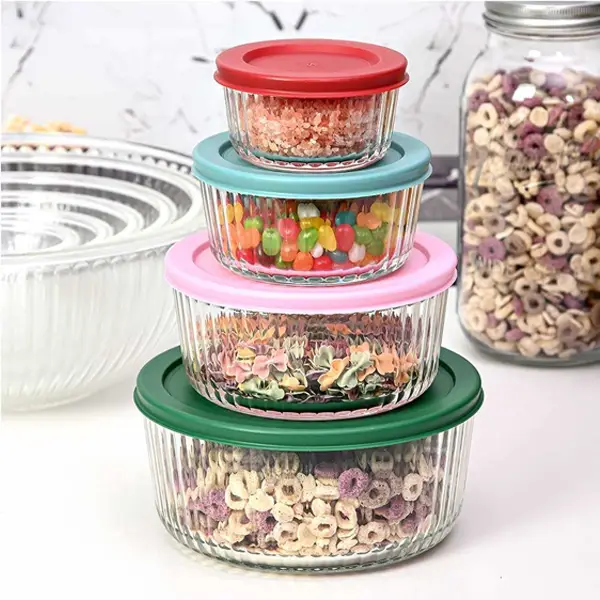
See our wholesale lunch box line — borosilicate bodies, four lid systems, container-load programs.
Frequently Asked Questions
Can I microwave a borosilicate glass lunch box?
Yes — microwave is gentler than oven heating. Vent the lid or remove it so steam escapes. See also: is borosilicate glass dishwasher and microwave safe?
Is tempered soda-lime glass oven-safe?
Sometimes, within the supplier’s rating — but tempering improves impact strength, not thermal shock resistance. For routine freezer-to-oven use, borosilicate is the safer spec.
What temperature can a glass lid handle?
There is no “glass lid” in most lunch box programs — lids are PP, silicone-framed or bamboo. None belong in a conventional oven. If your set has a glass lid (rare in lunch boxes), confirm its rating separately.
Does broiling damage borosilicate glass?
Direct broiler elements create intense, uneven heat that can exceed the thermal-shock guideline locally. We don’t recommend broiling in glass lunch boxes.
Can borosilicate glass go from fridge to oven?
Fridge (~4°C) to a moderate oven is roughly a 150–200°C differential — borderline. Let it sit at room temperature briefly first, and avoid maximum oven settings for the first minutes.
How do I know my supplier’s glass is really borosilicate?
Ask for the material spec in writing (3.3 borosilicate) and the thermal-shock figure. Visual checks don’t work — here’s how to tell borosilicate from soda-lime glass.
Need an Oven-Ready Lunch Box Program?
Tell us your target market, the reheating routine your buyers expect (oven, microwave, or neither), and whether the program is private label or open stock — we’ll recommend the body, lid system and packaging before quoting.